
How to Find Arlington County Arrest Records
Start with the jail. The Arlington County Sheriff's Office runs an online inmate query that shows who is in custody right now. You can search by name, subject number, or booking number, and the result shows the booking, charges, and court date. The query only reflects people currently held. Once someone is released, the system drops them from the public list.
For the full booking lookup, see the Arlington County inmate records page. After an arrest, the matching court case appears in the state systems within a few days. Misdemeanor and traffic arrests go to the General District Court system; felony cases move to the Circuit Court system.
- Search the Sheriff's inmate query if the person may still be in custody.
- Note the charge, bond, and court date from the booking record.
- Open the matching court case system to track the case.
- Check back as the case moves from charge to disposition.
Arrest data and court data are two different records. The booking record comes from the Sheriff. The case record comes from the court.
Arrest Record vs Criminal Court Record
These two records get mixed up often. An arrest record is created by law enforcement at booking. A criminal court record is created when the case is filed and tracks what the court does with it. One does not replace the other, and they can tell different stories about the same event.
| Feature | Arrest Record | Criminal Court Record |
|---|---|---|
| Created by | Sheriff or police at booking | The court when a case is filed |
| Shows | Booking, charges, mugshot, bond | Charges, hearings, plea, disposition, sentence |
| Where to find it | Sheriff inmate query | Circuit Court or General District Court systems |
| Proof of guilt? | No, an arrest only | Only when the disposition is a conviction |
For full case history, the Arlington County court records page covers the court side in depth.
Where Arlington County Criminal Cases Are Heard
Two courts split criminal work in Arlington. The General District Court handles misdemeanors, non-jailable offenses, bond motions, in-custody arraignments, and preliminary felony hearings. A preliminary hearing decides whether a felony charge has enough evidence to move up. If it does, the case goes to the Circuit Court.
The Circuit Court handles felony indictments, felony trials, sentencing, probation violations, and some misdemeanor appeals. Felony records there can include indictments, trial records, and sentencing orders. Both courts feed the same statewide case systems, so the search tool depends on the charge level.
Note: a felony case may appear in the district court system first as a preliminary hearing, then again in the Circuit Court system after indictment.
What Arlington County Arrest Records Show
A booking record and a charge record carry a standard set of fields. The Sheriff's inmate profile shows the booking side. The court case shows the charge and result side. Together they cover the fields below.
| Field | What It Shows |
|---|---|
| Name and Subject Number | The booked person's identity in the jail system |
| Booking Number and Date | When the person was booked, with a date and time stamp |
| Booking Photo | A mugshot image with the date it was taken |
| Charges | Charge description, offense date, and arresting agency |
| Bond | Total bond amount and bond type |
| Court Date and Court | Next hearing date and which court will hear it |
| Disposition | Result and sentence length when the case is decided |
Some fields are not shown publicly. The inspected profile did not list date of birth, race, housing pod, or release date.
Charges vs Convictions
This is the distinction that matters most in any arrest records search. A charge is an accusation. A conviction is the result after a finding of guilt. Many charges end without a conviction through dismissal, acquittal, or a nolle prosequi, which is the prosecutor dropping the charge.
| Point | Charge | Conviction |
|---|---|---|
| What it is | An accusation | A finding of guilt |
| When it appears | At the start of a case | At the end, in the disposition |
| What it means | Not proof of guilt | The final case result |
Read the disposition before drawing any conclusion. A record that shows a charge but no final disposition is still an open case.
Mugshots and Booking Photos
The Sheriff's inmate profile includes a booking photo with the date and time it was taken. That photo is part of the current in-custody record. When a person is released, the public listing and its photo drop off the inmate query.
Arlington does not run a separate mugshot gallery. The booking photo lives inside the inmate profile, not in a standalone database. Private mugshot sites are not official and are not used here.
Expungement of Arlington County Records
Virginia lets some people erase a record from public access after a case ends without a conviction. Arlington's Circuit Court runs a defined expungement process under Virginia Code § 19.2-392.2. It applies after an acquittal, a dismissal, a nolle prosequi, an absolute pardon, or identity misuse. The county page lays out the petition steps and the fees.
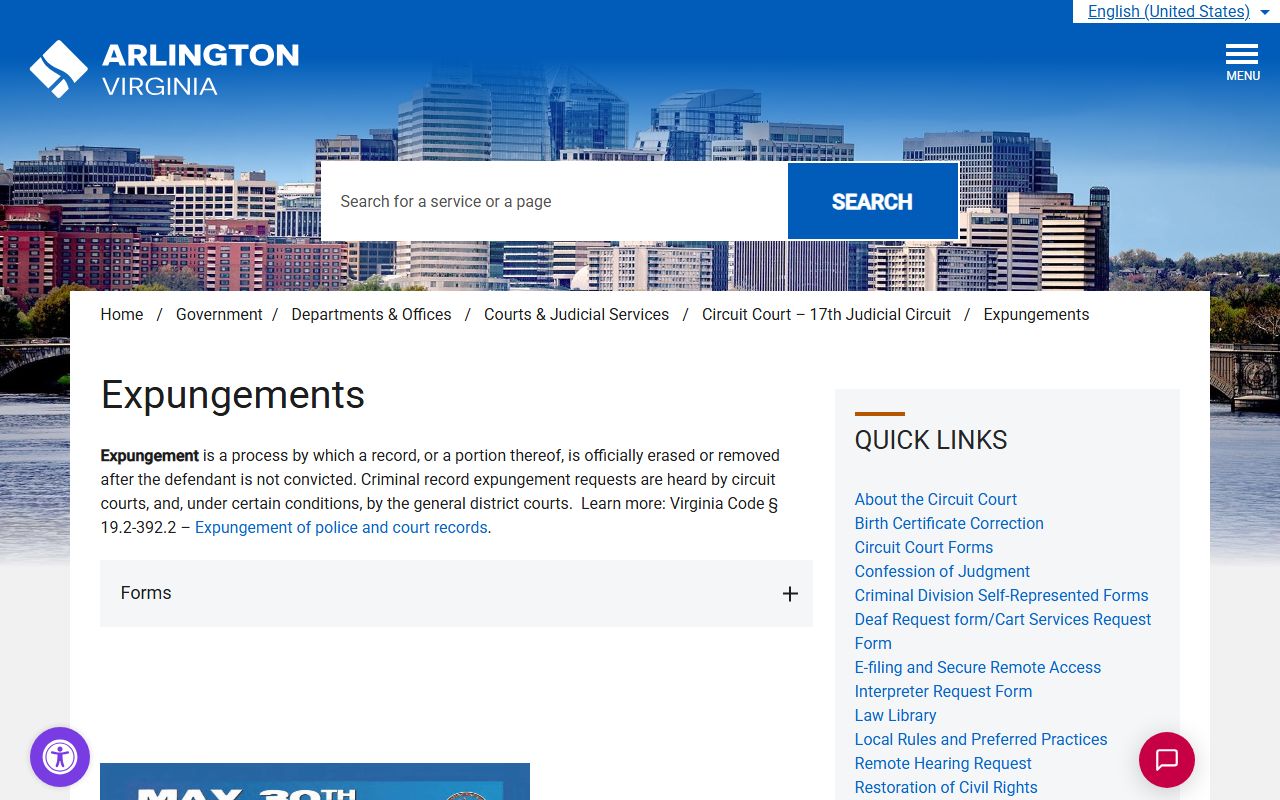
The Arlington expungement page lists the forms, the fingerprint schedule, and the filing total.
- Get four copies of the warrant of arrest.
- Make four copies of the petition: one for the Commonwealth's Attorney, one for law enforcement with the fingerprint request, and two for you.
- Get fingerprinted at the Sheriff's Office, Wednesdays and Thursdays from 12:30 to 4:00 p.m., 9th floor, with valid ID and a $15 cash fee.
- Law enforcement sends the fingerprint card and petition to the Central Criminal Records Exchange, which returns results to the court.
- The hearing is set about twelve weeks out on the Civil Motions docket, Fridays at 10:00 a.m.
The posted filing total is $103: $86 filing, $5 paper submission, and $12 sheriff service on the Commonwealth's Attorney. The statute itself spells out who qualifies.
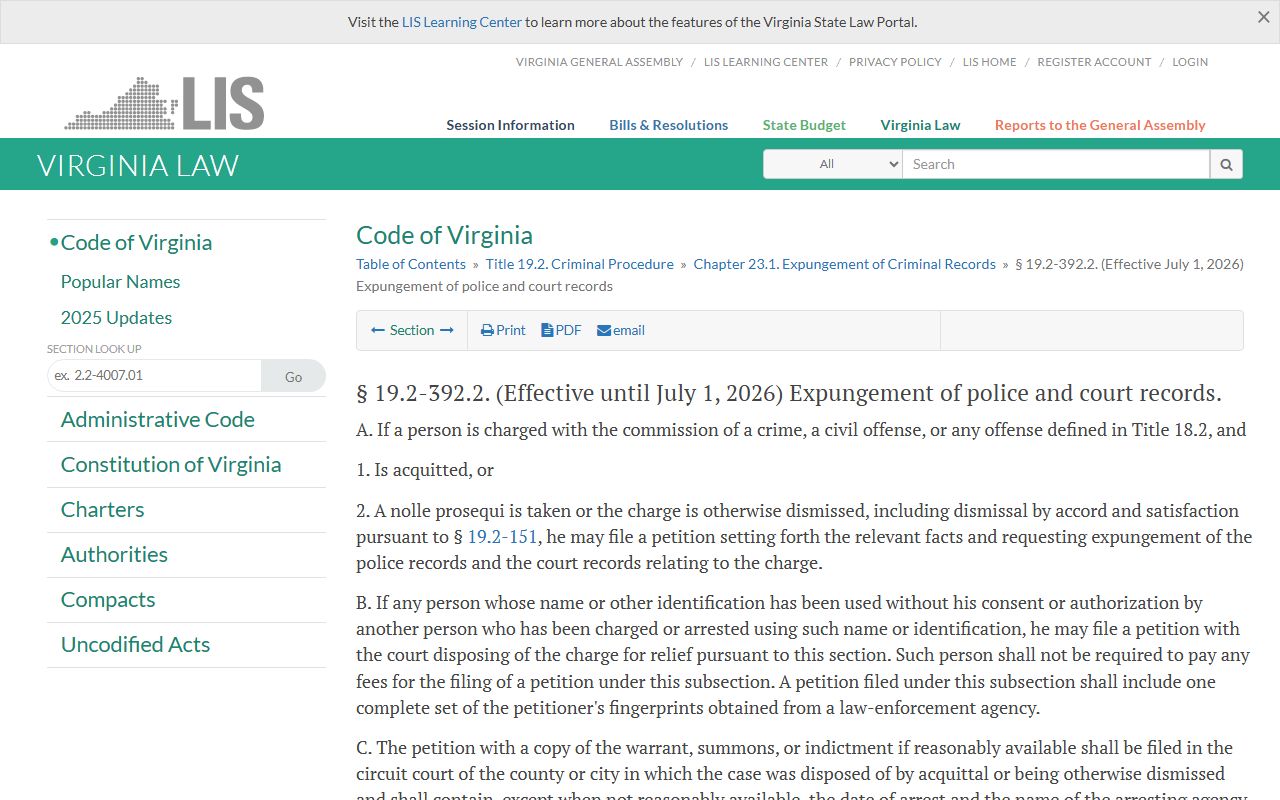
Section 19.2-392.2 is the law the clerk applies to every expungement petition.
Sealed vs Expunged Criminal Records
Sealing and expungement are not the same. Expungement removes a record from public access. Sealing restricts who can see it but does not erase it. Virginia added newer sealing rules under Title 19.2, Chapter 23.2, which set out how sealed records work and who may still reach them.
| Point | Sealed | Expunged |
|---|---|---|
| Effect | Public access restricted | Record removed from public access |
| Governing law | Title 19.2, Chapter 23.2 | § 19.2-392.2 |
| Who can still see it | Some criminal-justice and statutory users | Limited sealed access by agencies |
The sealing rules are still being phased in across Virginia. The criminal record sealing chapter holds the current procedures and access limits.
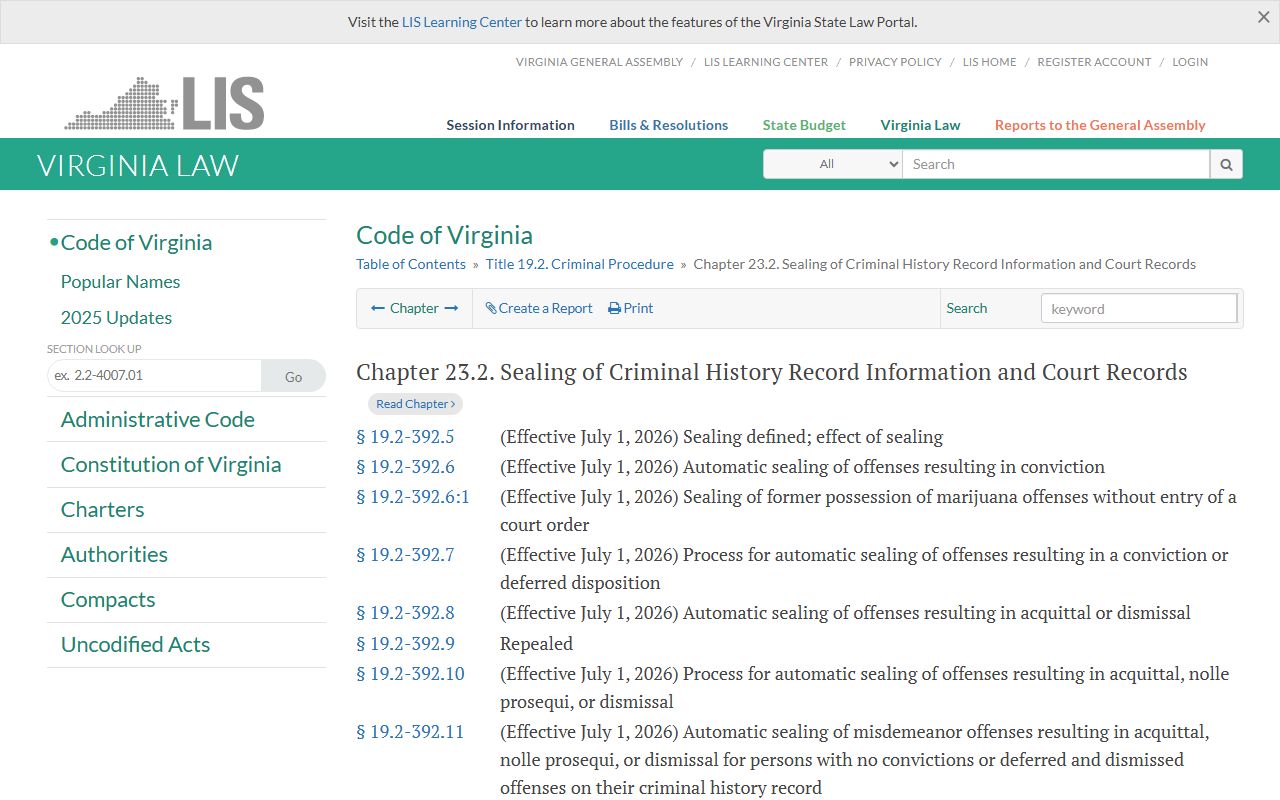
It explains the categories of records that may be sealed and who keeps access.
Restricted Criminal History and Law Enforcement Records
Not all criminal information is public. Juvenile court records are confidential under Virginia Code § 16.1-305. Law-enforcement investigative files have their own access rules. Under Virginia Code § 2.2-3706, some criminal incident information is open while active investigative files can be withheld.
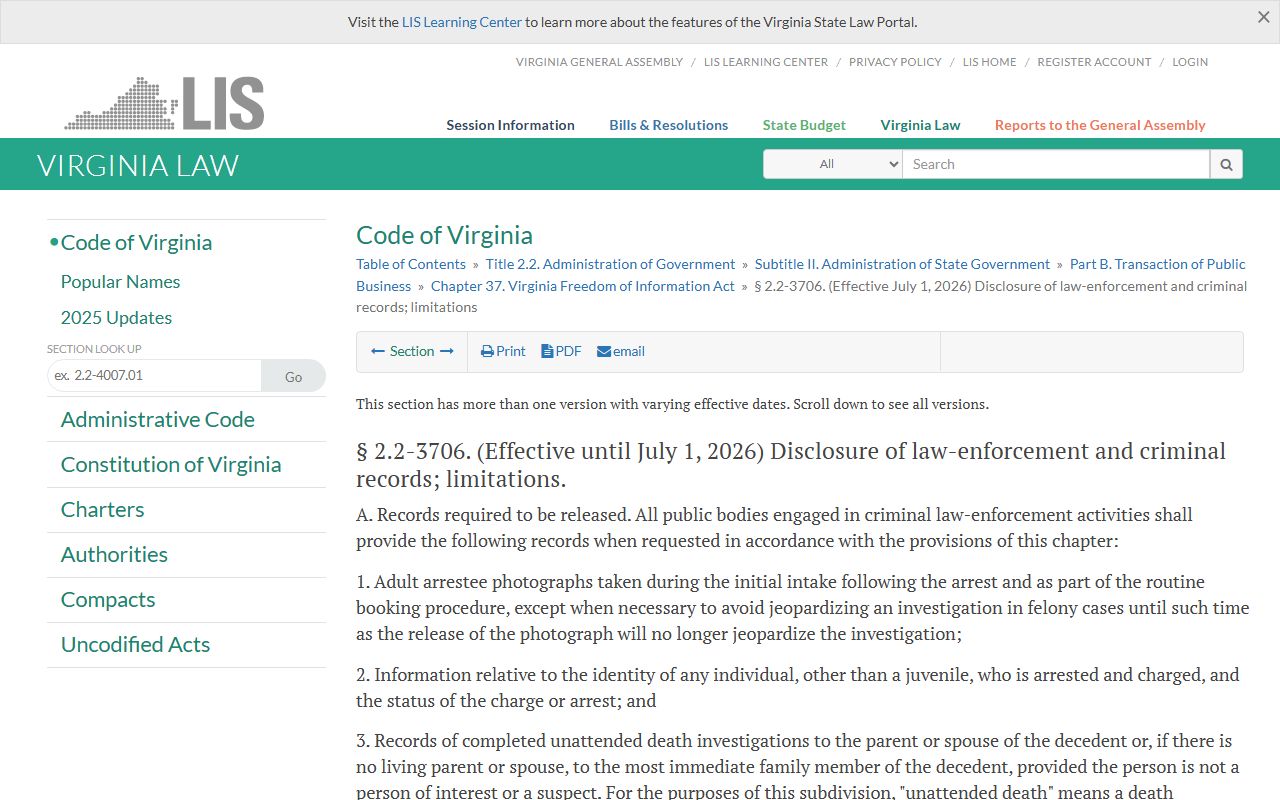
This statute draws the line between public incident data and protected investigative material.
Official criminal history is even more limited. Virginia Code § 19.2-389 controls who can receive criminal history record information from official state sources. A full background check usually goes through the Virginia State Police, not a court search.
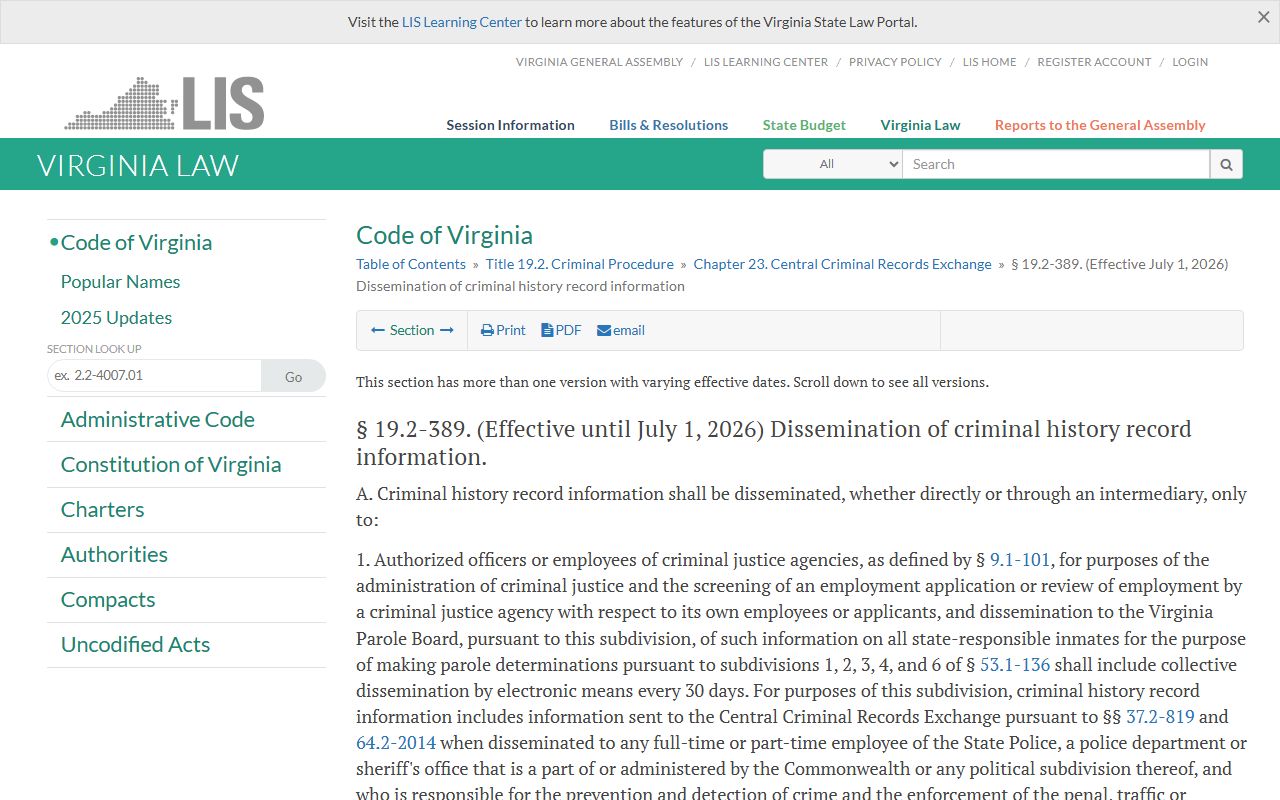
It limits criminal history to authorized users such as some employers and agencies.
The Virginia Sex Offender Registry
One criminal record set is fully public by design. The Virginia State Police run a statewide registry that anyone can search. It covers people required to register after certain convictions, and you can search by name or by address and radius.
The Virginia Sex Offender and Crimes Against Minors Registry is the official source. It may ask for an on-screen acknowledgment before showing results.
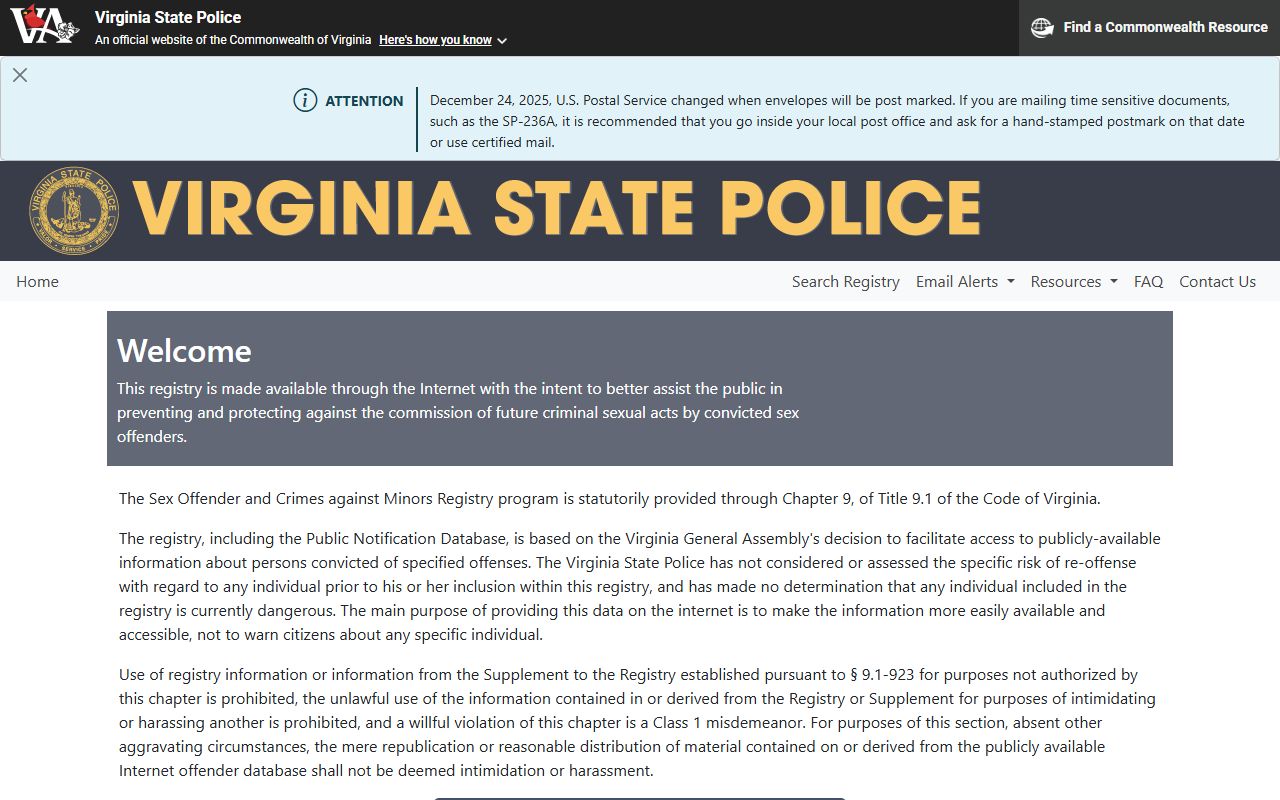
Use the address search to see registered offenders near an Arlington address.
Who Prosecutes and Defends Arlington Criminal Cases
Virginia uses the title Commonwealth's Attorney instead of district attorney. Parisa Dehghani-Tafti is the Commonwealth's Attorney for Arlington County and the City of Falls Church. Her office prosecutes crimes in Arlington, Falls Church, and Reagan National Airport, and runs a Victim/Witness Program, a Conviction Review Unit, and restorative justice work.
People who cannot afford a lawyer can ask the court about court-appointed counsel or the Arlington and Falls Church Public Defender, served through the Virginia Indigent Defense Commission. Eligibility is based on a financial affidavit. The court records and warrant records pages cover the case and warrant side of a criminal matter.