
Virginia District Courts Explained
Virginia runs a four-level court system. The Supreme Court of Virginia sits at the top, the Court of Appeals below it, the circuit courts as the trial courts of general jurisdiction, and the district courts as limited-jurisdiction trial courts. District courts do not hold jury trials. They handle a large share of everyday cases quickly and at lower cost.
Arlington has two district courts, both in the 17th Judicial District. The Virginia courts structure page explains how the appellate, circuit, district, and magistrate levels fit together.
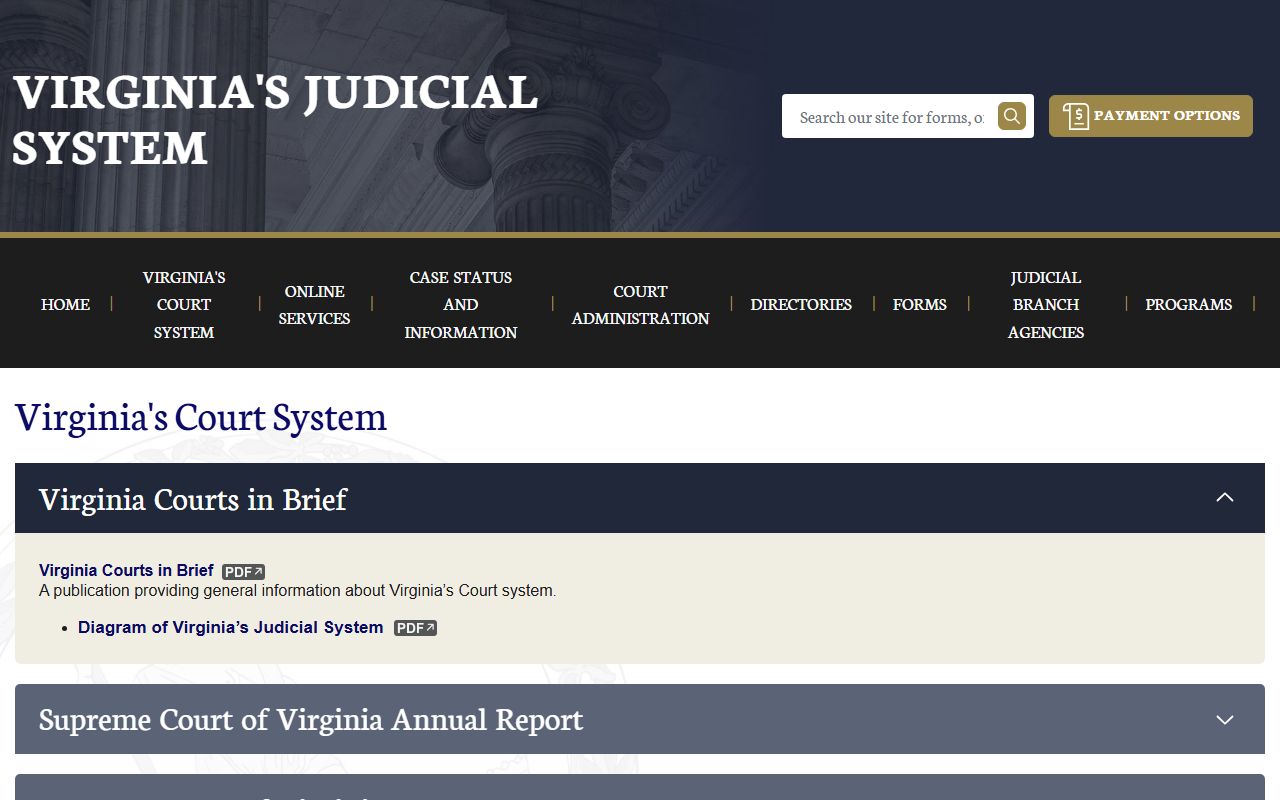
It is a clear map of where the district courts sit in the state system.
Arlington District Courts at a Glance
Both district courts share the courthouse address but use different suites and phone lines. The table lists each court, its district, suite, and clerk phone.
| Court | District | Suite | Phone |
|---|---|---|---|
| General District Court | 17th Judicial District | 2400 | 703-228-7900 |
| Juvenile and Domestic Relations District Court | 17th Judicial District | 4100 | 703-228-4495 |
Both courts serve Arlington County and the City of Falls Church, the same area the Circuit Court covers.
Arlington General District Court
The General District Court is the busiest court in the county. It hears misdemeanor trials, non-jailable offenses, bond motions, in-custody arraignments, and preliminary felony hearings. On the civil side, it handles claims up to $25,000, small claims, and landlord-tenant cases. It also processes criminal warrants, traffic summonses, and mental commitment hearings.
Chief Judge Jason S. Rucker leads the court, with Judges Adam M. Krischer and Cari M. Steele. The clerk is Brian P. Henshaw at 703-228-7900. Traffic prepayment is available by calling 703-228-4599 for many offenses, which avoids a court appearance.
A preliminary hearing here decides whether a felony has enough evidence to move up to the Circuit Court.
Arlington Juvenile and Domestic Relations District Court
The J&DR Court handles family and juvenile matters. Its docket includes juvenile delinquency and traffic, custody, visitation, support, family abuse, child abuse and neglect, and criminal cases where the defendant and alleged victim are family or household members. Presiding Judge Robin L. Robb Kendrick leads it with Judge W. Michael Chick Jr., and the clerk is Teresa Elizabeth Lara at 703-228-4495.
The court runs a Court Services Unit alongside the docket. It offers intake services, juvenile and adult probation, and supervised visitation and exchange through the Safe Havens program, plus group homes and mentoring programs. Many J&DR records are confidential by statute, so they are far less open than General District Court files.
Magistrate Services
Magistrates work before a case reaches a courtroom. They handle probable-cause decisions, issue warrants, set bail, and grant emergency protective orders. A person arrested in Arlington often sees a magistrate first for an initial bond decision.
Magistrate Services are part of the court structure but are not a trial court. Their decisions feed into the district courts, where the case is then heard. The warrant records page covers how warrants and capias orders show up later in a case.
District Court vs Circuit Court
The district and circuit courts split the work by case type and size. The district courts move fast and handle volume. The Circuit Court handles the heavier matters and holds jury trials. The table compares the levels, with the magistrate added for context.
| Feature | District Courts | Circuit Court | Magistrate |
|---|---|---|---|
| Level | Limited jurisdiction | General jurisdiction | Pretrial officer |
| Handles | Misdemeanors, traffic, civil up to $25,000, family and juvenile | Felonies, divorce, probate, civil over $25,000 | Warrants, bail, protective orders |
| Jury trials | No | Yes | No |
| Appeals | To the Circuit Court, heard de novo | To the Court of Appeals of Virginia | Not applicable |
The Clerk of the Circuit Court page covers the general-jurisdiction side in detail.
How a Case Moves Through the System
A criminal case often starts with a magistrate, then moves through the courts in order. Knowing the path helps you find the right record at each stage.
Case flow: Magistrate › General District Court › Circuit Court › Court of Appeals of Virginia › Supreme Court of Virginia
A misdemeanor may begin and end in the General District Court. A felony usually has a preliminary hearing there first, then moves to the Circuit Court for indictment and trial. Each step creates its own record in the matching court system.
District Court Schedules and Dockets
Each district court posts its own schedule. The General District Court runs separate criminal, traffic, and civil dockets, and it posts memos when a docket changes. The J&DR Court posts its own schedules and a continuance policy.
To pull a docket, search the state case systems by hearing date for the General District Court. The Arlington County court dockets page explains the hearing-date search and how to read docket entries.
Appeals to the Circuit Court
A district court ruling is not the last word. An appeal from the General District Court to the Circuit Court is generally heard de novo. That means the Circuit Court tries the case again from scratch rather than reviewing the lower court's record.
This de novo path is a key feature of Virginia's system. A defendant who loses a misdemeanor or traffic case in the district court can get a full new trial in the Circuit Court. The case then creates a separate Circuit Court record.
Traffic and Protective Orders
The General District Court is the traffic court for Arlington. Citations, summonses, and most traffic offenses are heard here, and many fines can be prepaid. Serious traffic matters like DUI can carry criminal consequences and require a court appearance.
Protective orders are different. They run through the courts but are excluded from the General District Court online case system, even when the case exists. For traffic case detail, see the traffic court records page, and for criminal overlap, the arrest records page.
District Court Records and Where They Live
District court records are managed under their own statute. Virginia law sets how district courts keep, microfilm, and store records on electronic and microphotographic systems. That framework is why district court case data is searchable online through the state system.
The rule sits in Virginia Code § 16.1-69.54:1. It governs district court records systems statewide.
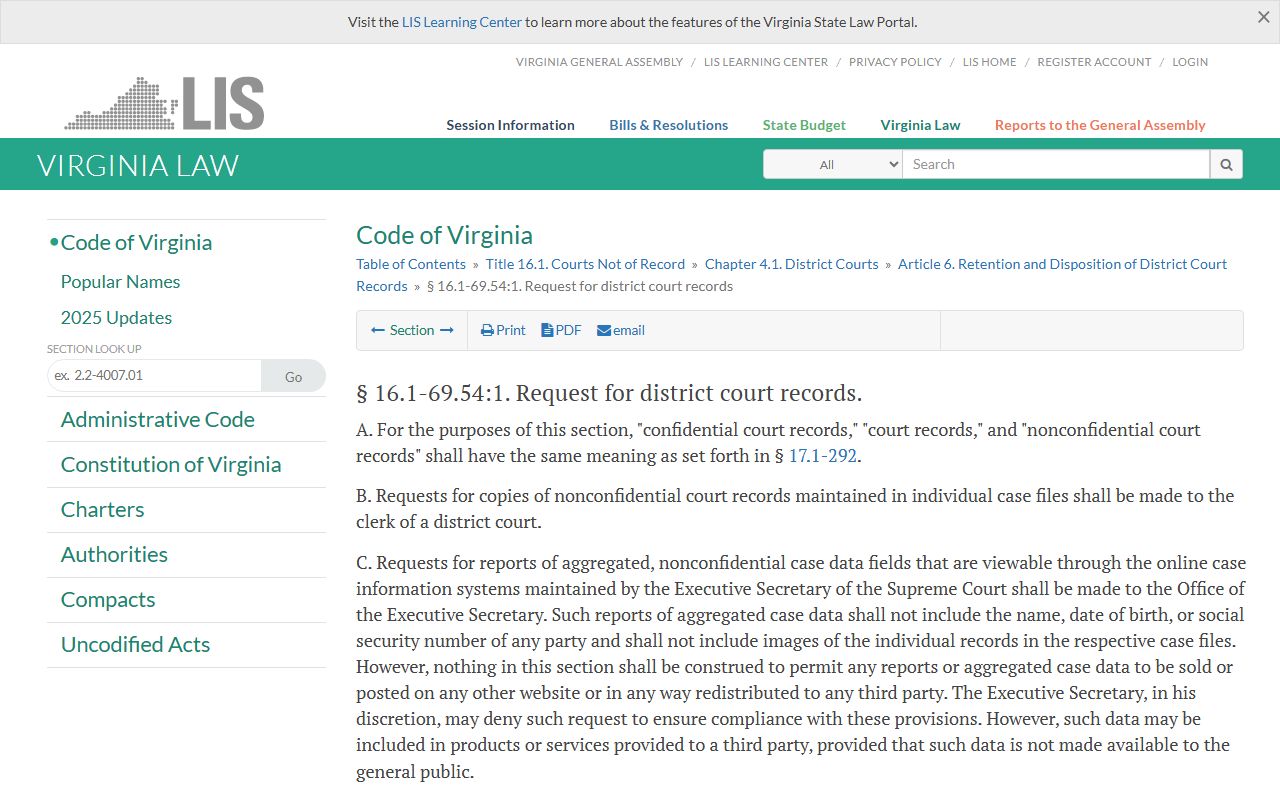
It is the legal basis for how Arlington's district court records are stored and shared.
The Arlington Justice Center
All of Arlington's trial courts share one building. The Arlington County Justice Center at 1425 North Courthouse Road holds the Circuit Court, both district courts, the Sheriff's Office, and the detention facility. The complex sits in the Court House neighborhood, the center of county government, near the Court House Metro station. The Courthouse neighborhood page describes the government center.
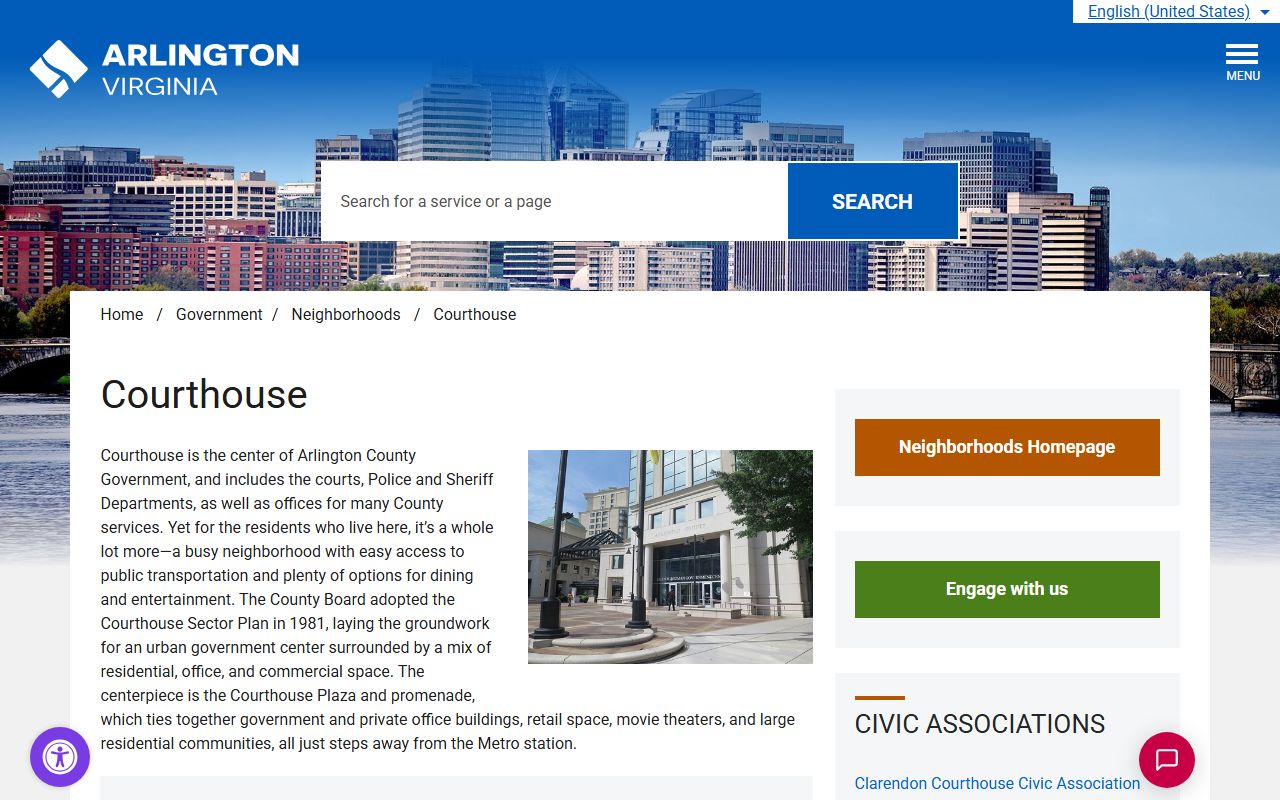
The courts were built into a dense, transit-oriented government center rather than a small-town square.
The current courthouse was completed in 1995, replacing earlier courthouse sites. The Arlington Public Library history traces the courthouse through several eras.
That history explains why a court visit here feels urban, with strict security and no phones for most visitors.
Why Arlington's District Courts Stay Busy
Arlington packs a lot into a small space. It is the smallest self-governing county in the country by land area, under 26 square miles, with about 243,760 residents. That density, plus federal facilities and Reagan National Airport, drives a steady district court caseload. The Arlington County profile reports the current population.

A dense, busy jurisdiction means a high volume of traffic and misdemeanor cases.
Many people in the district court caseload are not county residents. They are people cited or arrested while passing through. The Arlington fast facts page captures the county's small footprint.

The small size and heavy through-traffic shape who ends up before the district courts.