
How to Search Arlington County Probate Records
Probate records live with the Circuit Court Clerk's Probate Office. They are public and open at the courthouse. Newer records can be reached online through the county's STARR system, while older files use kiosk indexes and printed will books. The path depends on the record's age and whether you need a document image.
The Probate Office records wills, qualifies personal representatives, and keeps estate files. The Arlington Probate and Wills page lists the forms, fees, and appointment process in one place.
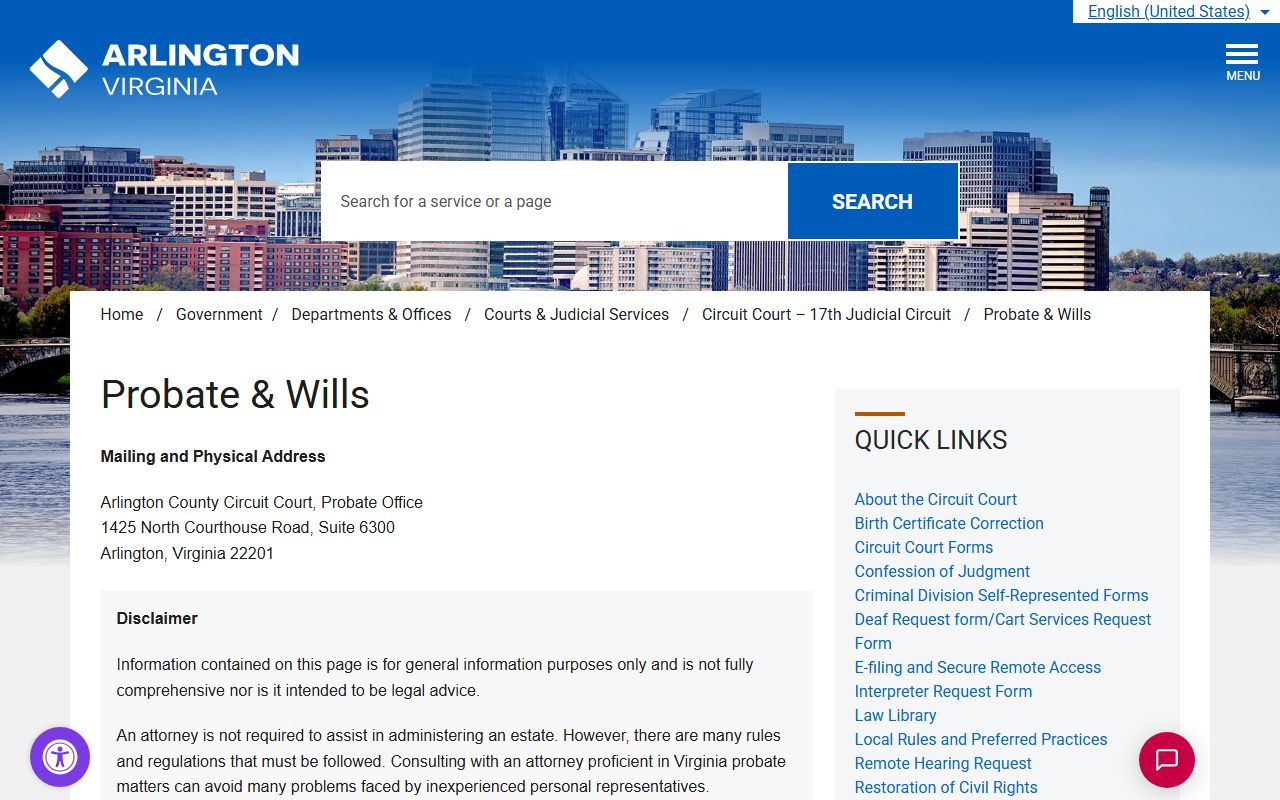
It is the official starting point for any Arlington County probate search or appointment.
The Arlington County Probate Office
Probate is handled by appointment at the courthouse. The office is in the Circuit Court complex, with its own phone, email, and fax. Bring the right documents to the appointment, since the clerk reviews them on the spot and administers the oath when records are in order.
Arlington Probate Office
1425 North Courthouse Road, Suite 6300
Arlington, VA 22201
703-228-4376
probate@arlingtonva.us
The office is part of the Clerk of the Circuit Court, so probate questions and clerk services share the same building.
What Probate Covers in Arlington County
Probate is the court-supervised process for proving a will and appointing someone to settle an estate. It also covers guardianships and conservatorships for people who cannot manage their own affairs. The records can include wills, orders of probate, lists of heirs, inventories, accountings, and certificates of qualification. A few terms come up over and over.
- Testator
- The person who made the will.
- Executor
- The person named in a will to carry it out and settle the estate.
- Intestate
- Dying without a valid will.
- Fiduciary
- A personal representative, executor, administrator, guardian, or trustee with legal duties.
- Guardian
- A person appointed to care for an incapacitated adult or a minor.
- Conservator
- A person appointed to manage the finances of an incapacitated adult.
When a person dies intestate, the court still appoints an administrator to handle the estate.
The estate file builds up over time. After qualification, the personal representative files an inventory of the estate's assets and later files accountings that show money coming in and going out. A list of heirs, the probate information form, and any guardianship reports join the file too. Once recorded or approved, these documents become public probate records, which is why an estate file can be a useful research source for property and family history.
Probate Appointment Documents
The clerk needs a specific set of papers to qualify a personal representative. Gather them before the appointment, because the review happens during the visit. The core list is below.
- Original will, if there is one
- Certified copy of the death certificate
- Completed Application for Probate
- List of Heirs, Form CC-1611
- Probate Information Form, Form CC-1650
- Probate Tax Return, Form CC-1651
- Valid photo ID and payment for the fees
The clerk also asks for the name and address of the person who should receive future Arlington or Falls Church property tax bills for the estate.
Estate Administration Steps
Settling an estate follows a clear order. The personal representative qualifies first, then carries out a series of duties under court oversight. These are the main steps.
- Confirm the decedent lived in or owned property in Arlington County or Falls Church.
- Schedule a probate appointment with the Probate Office.
- Bring the will, certified death certificate, ID, forms, and payment.
- The clerk verifies ID, reviews documents, administers the oath, and issues qualification.
- The representative handles notices, inventory, taxes, debts, and distribution.
- Inventories and accountings are filed and become public once recorded or approved.
Estate administration has many rules, so the county suggests consulting an attorney even though one is not required.
Arlington County Probate Fees and Taxes
Probate carries both fees and a tax. The fees cover copies, certifications, and qualification documents. The probate tax applies when a personal representative qualifies or a will is admitted and the estate is worth more than $15,000. The fee table is below.
| Item | Fee |
|---|---|
| Copies | $0.50 per page |
| Certification | $2.00 per document |
| Letters or certificates of qualification | $2.00 each |
| Wills for safekeeping | $5.00 for 100 years |
| Bond change filing | $10.00 |
| Guardian initial or annual report | $5.00 to Arlington DHS |
| Show Cause Order filing | $10.00 |
Pay by check, cash, or card. Card payments add a 4% convenience fee, and remote payments are not accepted.
Wills for Safekeeping
Arlington lets a living person deposit a will with the clerk for safekeeping. The fee is $5.00 and covers 100 years of storage. This keeps the original will secure and easy to locate when the time comes.
Depositing a will is not the same as probate. It simply stores the document until it is needed. Probate begins only after the testator dies and someone applies to qualify.
Guardianship Reports in Arlington County
Guardians and conservators carry reporting duties. A guardian files initial and annual reports with Arlington's Department of Human Services. Virginia also requires guardians to complete state guardian training within 120 days of qualifying. These rules sit in Virginia Code § 64.2-2020.
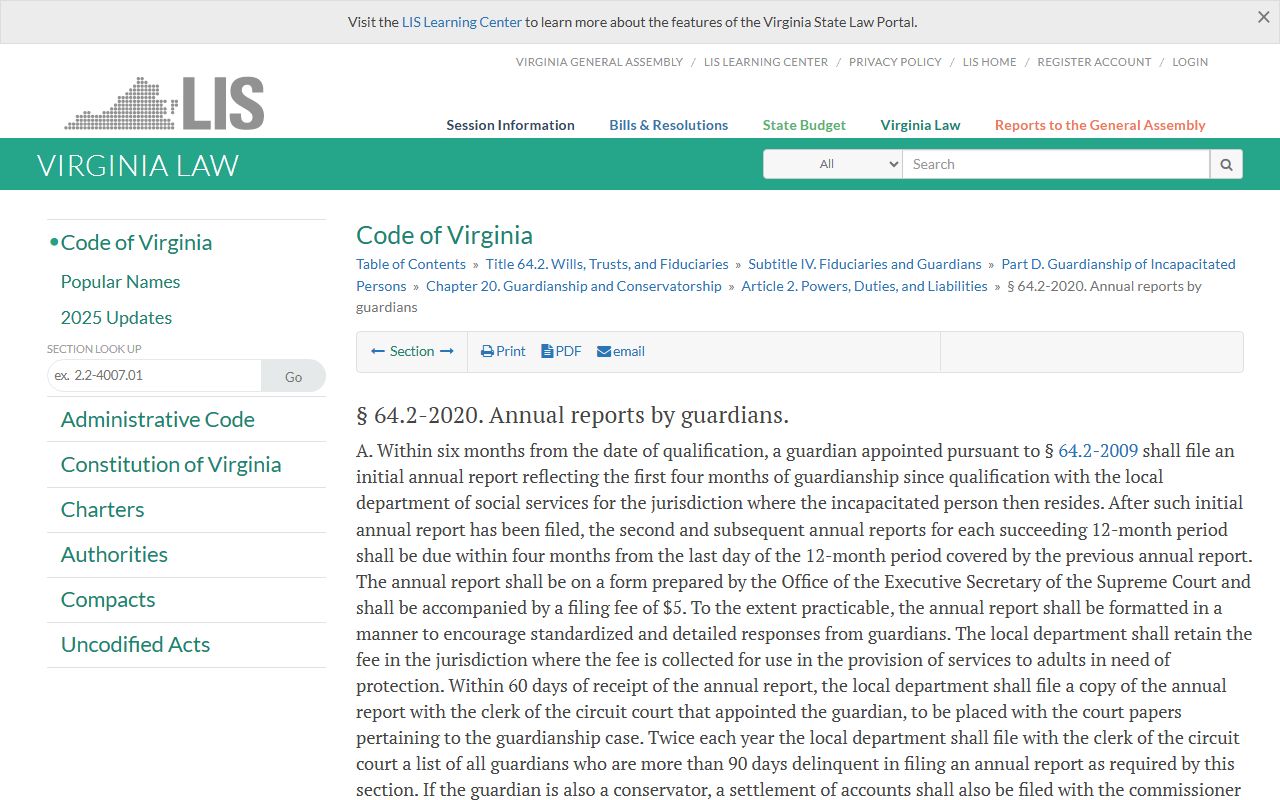
The statute spells out what a guardian must report and how often.
Searching Probate Records with STARR
Arlington's STARR system holds computerized probate records from 1997 to the present, with document images after 2000. Records from 1800 to 1996 use computerized indexes on public kiosks in Land Records, where a clerk pulls the printed will book for an individual document. Remote STARR access is available, but viewing images remotely requires a Land Records subscription.
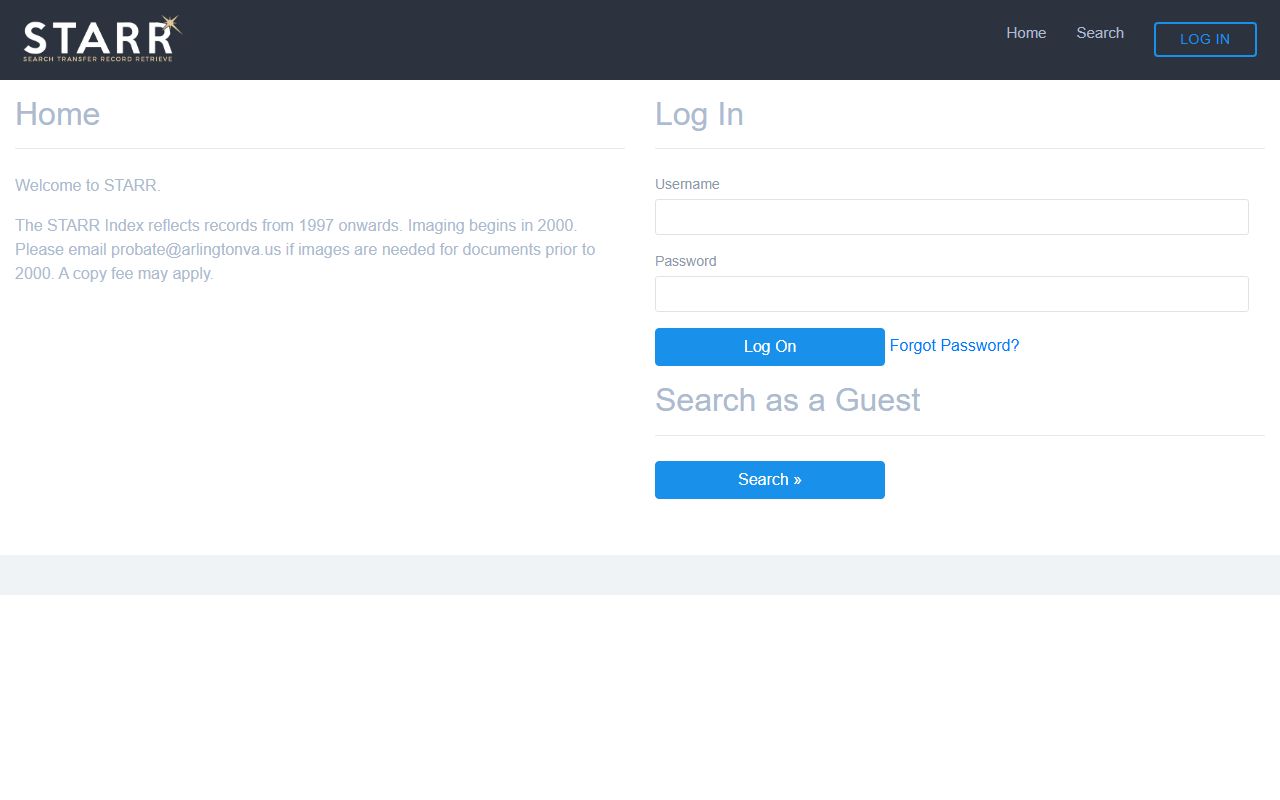
STARR is the bridge between in-person courthouse access and remote probate research.
Restricted Family and Adoption Records
Some related records are not open the way probate files are. Adoption records are sealed and follow a separate state disclosure process. Virginia Code § 63.2-1246 channels access to adoption records through the Virginia Department of Social Services rather than open inspection.
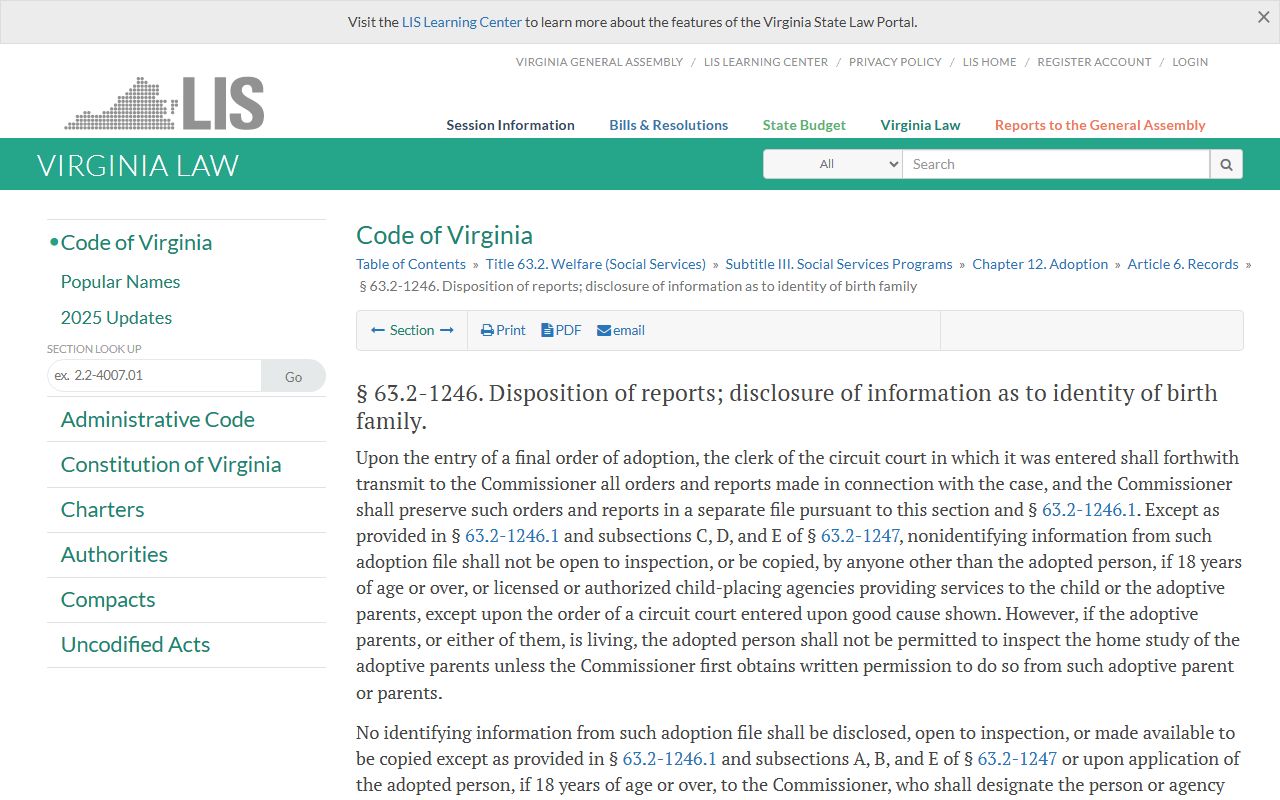
It restricts who can see identifying adoption information and how.
Custody and visitation records also carry confidentiality limits. Virginia Code § 20-124.6 governs access to those records, which are heard in the Juvenile and Domestic Relations District Court.
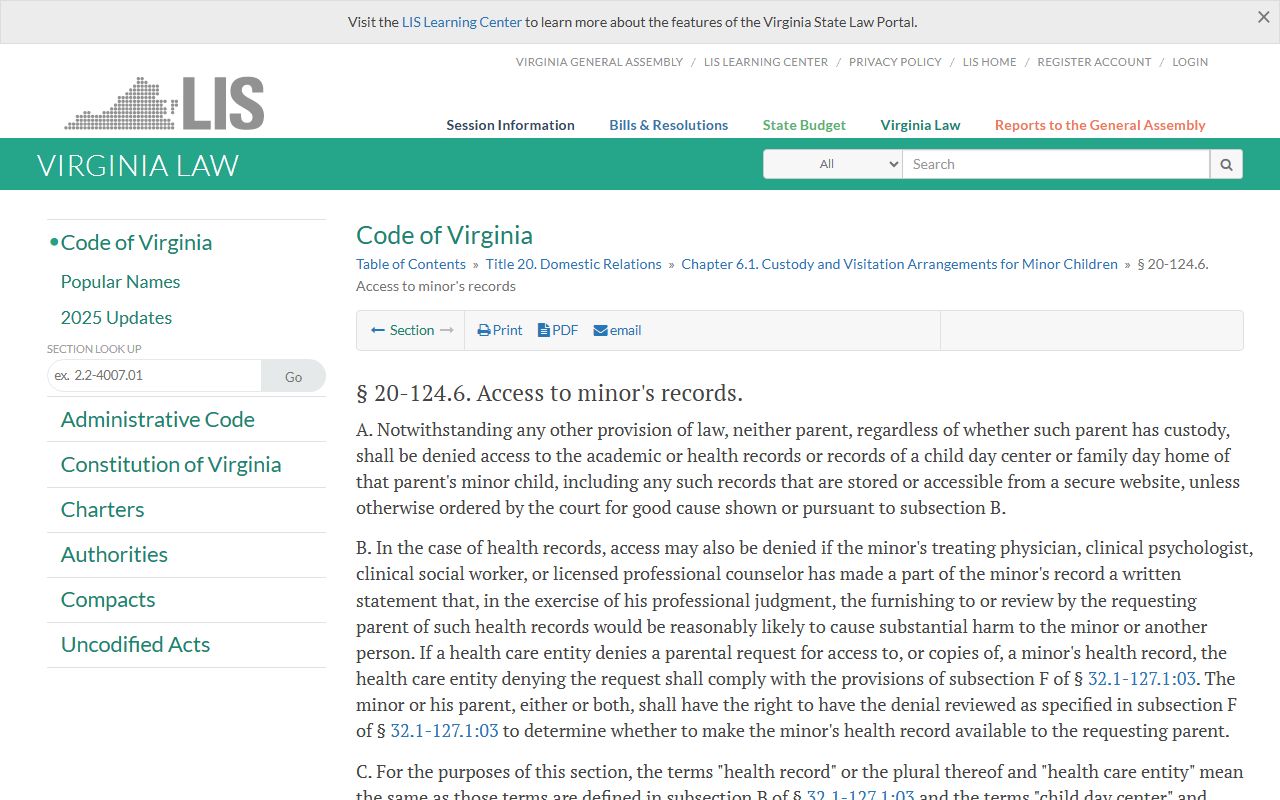
It limits who can access a child's custody and visitation file.
Virginia Wills and Fiduciaries Law
Probate sits under a broad state law. Title 64.2 of the Virginia Code covers wills, trusts, and fiduciaries, including estates, guardians, conservators, and related filings. It is the legal backbone for everything the Probate Office does.
The full Virginia Wills, Trusts, and Fiduciaries title is the place to confirm a specific estate rule.
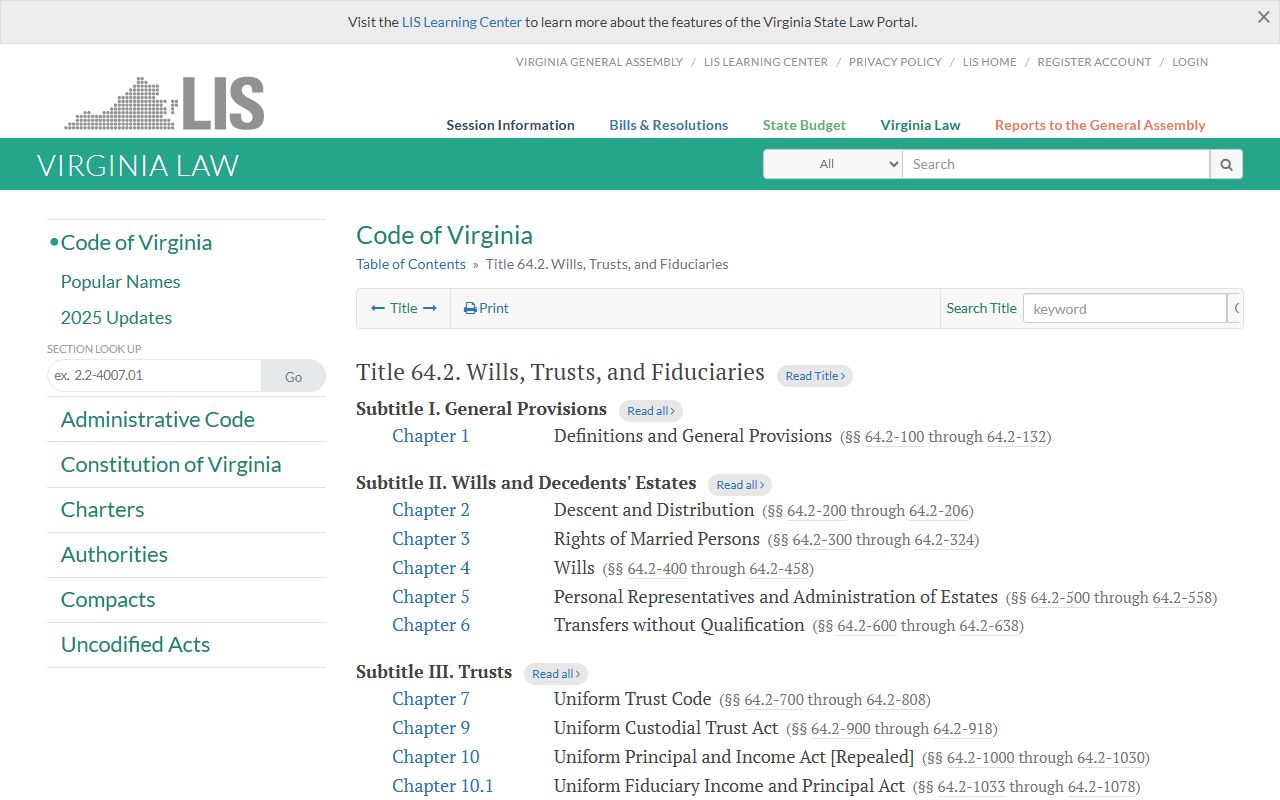
It governs qualification, inventories, accountings, and guardianship duties statewide.