
How to File an Arlington County Public Records Request
A public records request starts with the right office. Court files go to the clerk. Police and jail records go to the Sheriff. Other records go to the county agency that holds them. Virginia's Freedom of Information Act request statute requires offices to open public records on request and to give a cost estimate before charging.
- Identify which office holds the record you need.
- Put the request in writing with enough detail to find it.
- Send it to the right office by email or mail.
- Expect a response within the statutory time, with a cost estimate if charges apply.
- Pay the actual cost, then receive the records or an explanation of any exemption.
The more specific the request, the faster the answer. Give names, dates, and document titles when you can.
Virginia FOIA Basics
The Freedom of Information Act is built on a simple idea. Government records are open unless a law specifically exempts them, and exemptions are read narrowly. An office must respond within the statutory time and may charge the actual cost of finding and copying records, with an estimate first.
FOIA is not the only rule for court files. Case records also fall under court-specific statutes and court rules. So a court record request blends FOIA with those court rules, while a county agency request is pure FOIA.
Court Records vs Agency Records
Not all public records work the same way. Court case files are governed by court statutes, while general county records run under FOIA. The table sorts out the difference.
| Feature | Court Records | Agency Records |
|---|---|---|
| Governing law | Court statutes plus FOIA | Virginia FOIA |
| Held by | Clerk of the Circuit Court or district clerks | County agencies and the Sheriff |
| Examples | Case files, dockets, judgments | Meeting minutes, budgets, contracts |
| How to access | Case systems or clerk copy request | FOIA request to the agency |
Circuit court records are open for public inspection under Virginia Code § 17.1-208 unless another law restricts them.
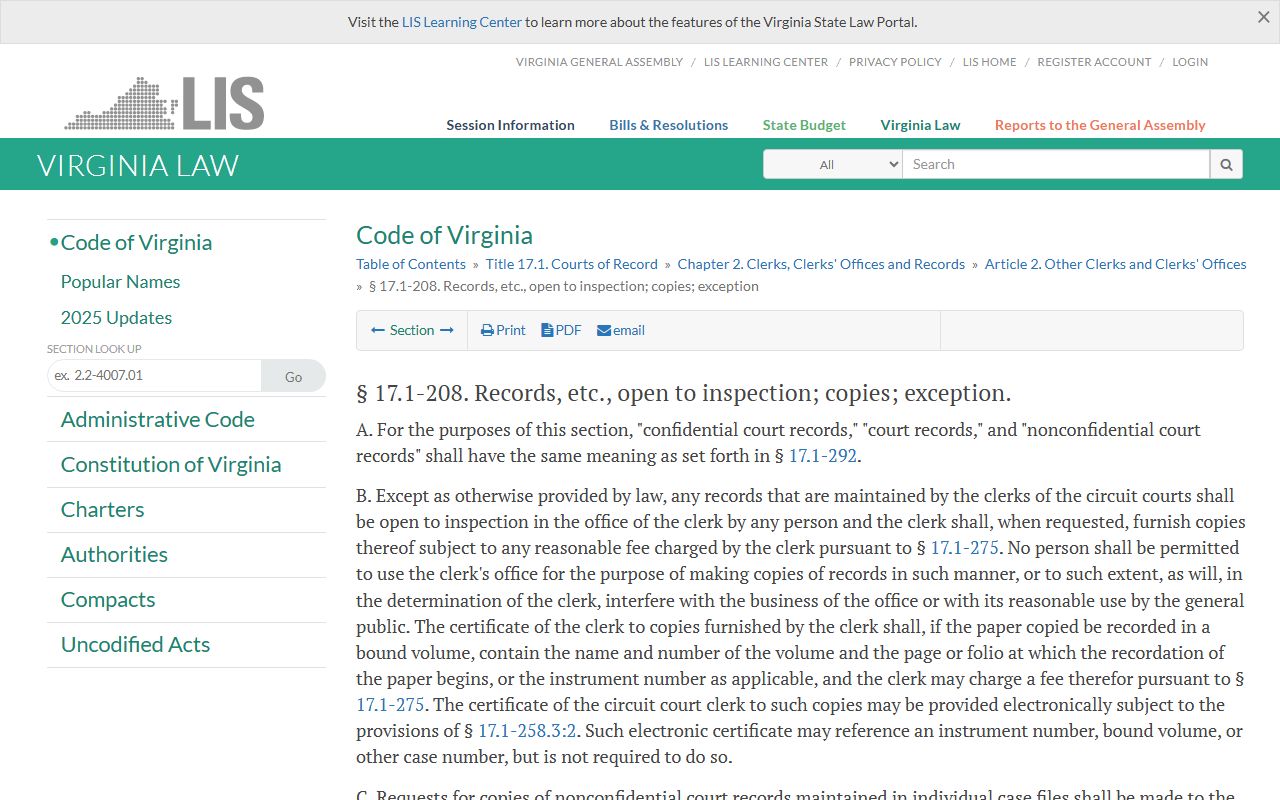
This statute is the core rule for inspecting Circuit Court files.
Remote Access to Court Records
Online access is allowed, but it is narrower than counter access. Clerks may offer remote access to nonconfidential court records while keeping confidential material protected. That is why the free online systems show case status but not every document.
The rule sits in Virginia Code § 17.1-292. It lets clerks build remote systems for nonconfidential records without exposing protected files.
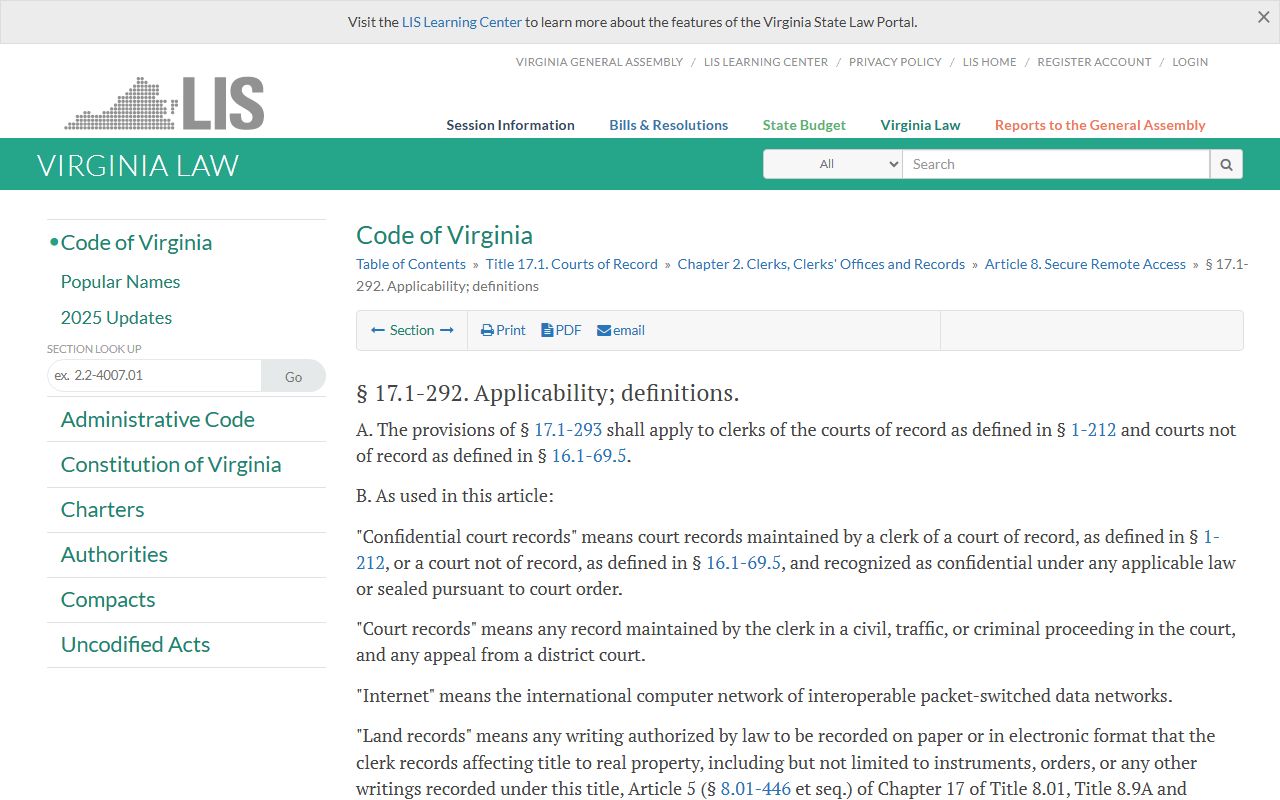
It explains why some public records are online while others stay at the courthouse.
Public Records Request Fields
For court copies, Arlington uses an email request rather than a standard form. Even so, a good request includes a set of practical details so the clerk can find the file. Include the fields below.
| Field | Type | Required | Notes |
|---|---|---|---|
| Record or case type | Text | Yes | What you are asking for |
| Case number | Text | No | Speeds the search when known |
| Party names | Text | Conditional | Helps locate the file |
| Document names | Text | Conditional | The specific documents wanted |
| Certified copy? | Yes / No | No | State whether certification is needed |
| Contact and delivery | Text | Yes | For the cost estimate and pickup, mail, or email |
Civil court documents go to civil-docrequest@arlingtonva.us, and criminal documents go to CCT-DocRequest@arlingtonva.us.
Arlington County Public Records Copy Fees
Reading records is usually free. Copies cost money, and certification adds a flat charge. FOIA copies can reflect the actual cost of the work, with an estimate given first. The common fees are below.
| Item | Amount |
|---|---|
| Plain copy per page | $0.50 |
| Certification per document | $2.00 |
| Digital media such as video evidence | $10.00 flat |
| Land record image | $0.50 per page plus $2.00 transaction fee |
| FOIA copies | Actual cost, with an estimate first |
In person, the clerk takes cash, check, money order, or card with a 4% convenience fee. The court records page covers the copy process in more depth.
Land Records and Clerk-Maintained Records
The Clerk of the Circuit Court keeps more than case files. The Land Records Division records deeds and documents that affect title to real property in Arlington and the City of Falls Church. It also files judgments and financing statements. These are public records, searchable through a separate county portal.
You can create a free account to search the land index, which reaches back electronically to 1869. Document images cost money or need a subscription. For the clerk's full record set, see the Clerk of the Circuit Court page.
Law Enforcement and Prosecution Records
Police and prosecution records have their own access rules. Some criminal incident information is open, while active investigative files can be withheld under FOIA. The Commonwealth's Attorney prosecutes county cases, and her office runs victim and conviction-review programs.
Parisa Dehghani-Tafti is the Commonwealth's Attorney for Arlington County and the City of Falls Church. The Commonwealth's Attorney page describes the office's functions and initiatives.
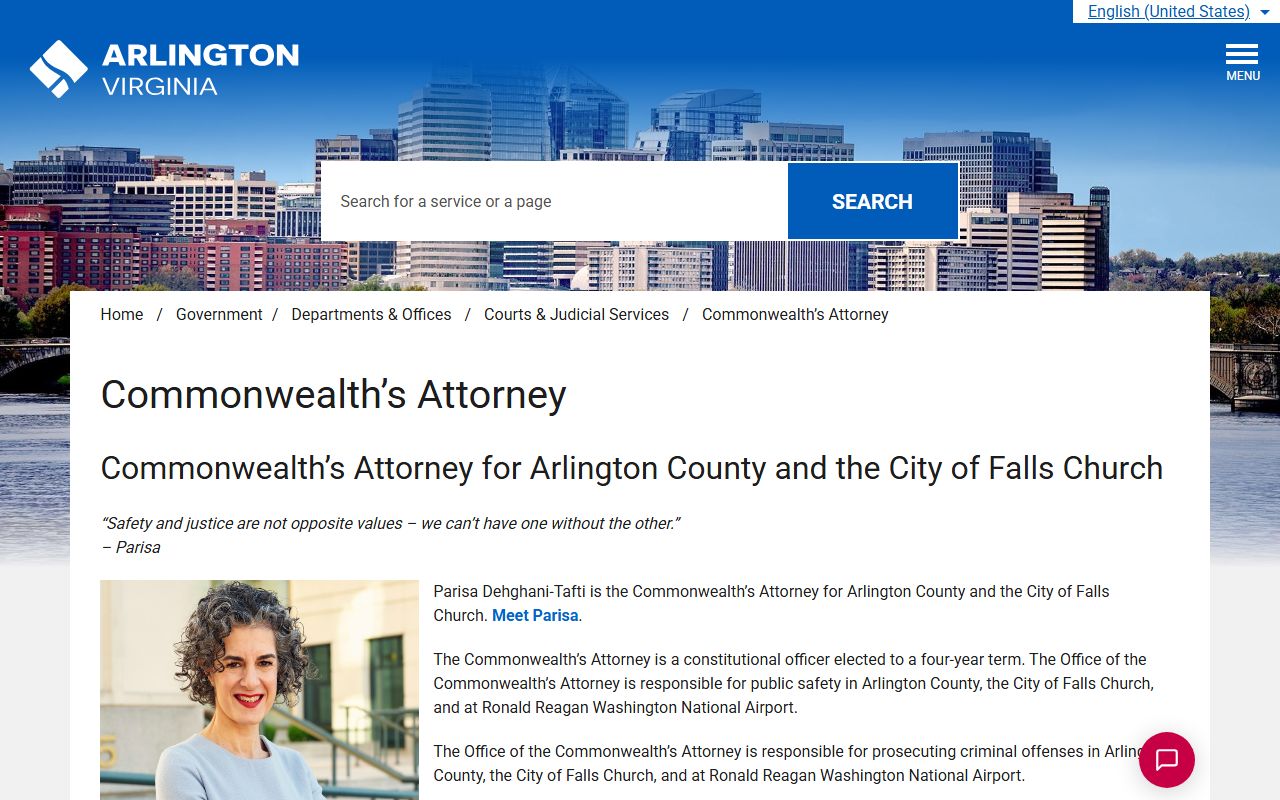
It is the office that decides charging and handles prosecution records.
Juvenile, Adoption, and Other Restricted Records
Some records are closed even though most are open. Juvenile court records are confidential under Virginia Code § 16.1-305, with limited exceptions. Adoption records, sealed and expunged criminal records, protective orders, and civil commitment files are also restricted.
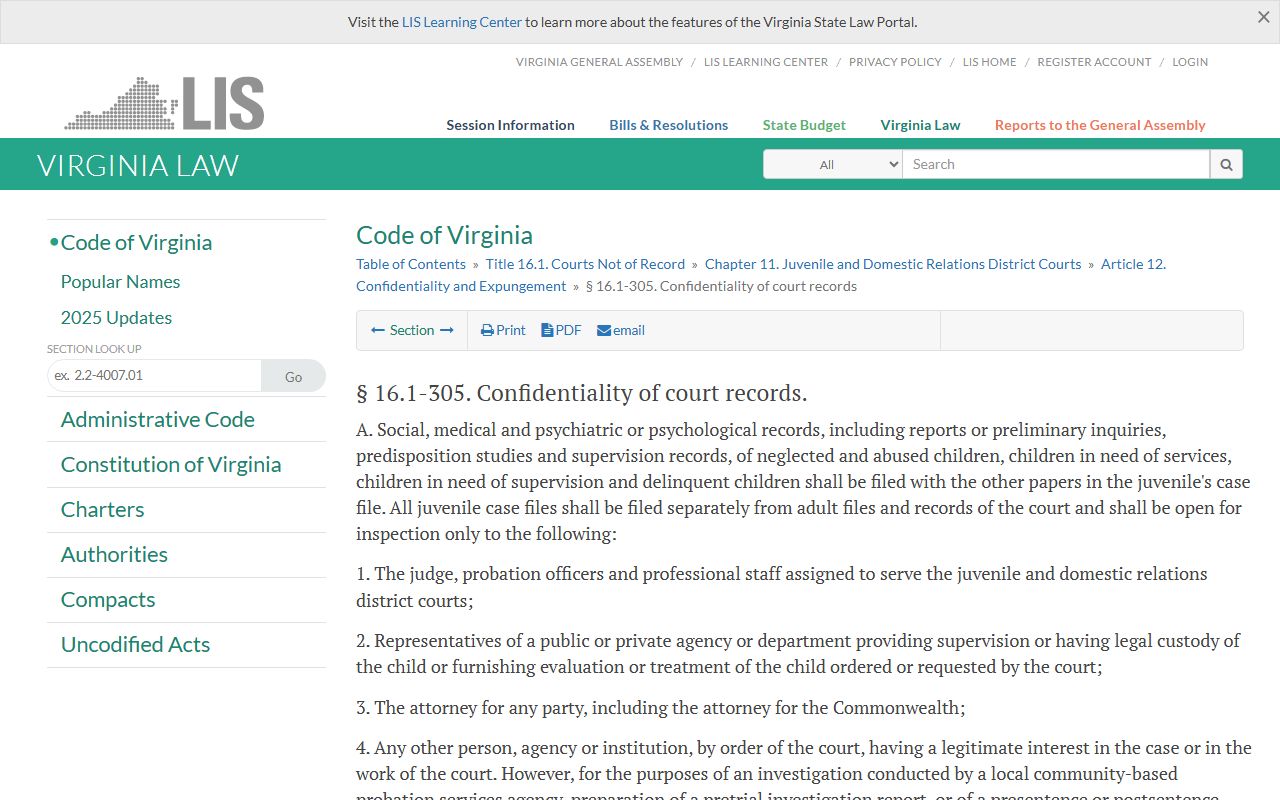
It lists the narrow set of people and agencies that may access juvenile files.
Official criminal history is also limited by statute, so a full background check goes through the Virginia State Police rather than a public records request. The arrest records page covers those limits.
Expunging Eviction Records
One public record can be removed in some cases. Virginia allows expungement of certain unlawful detainer, or eviction, records when statutory conditions are met, such as a dismissed or nonsuited case. This helps renters whose cases ended without a judgment against them.
The rule is in Virginia Code § 8.01-130.01. It sets the conditions for clearing eligible eviction records from public access.
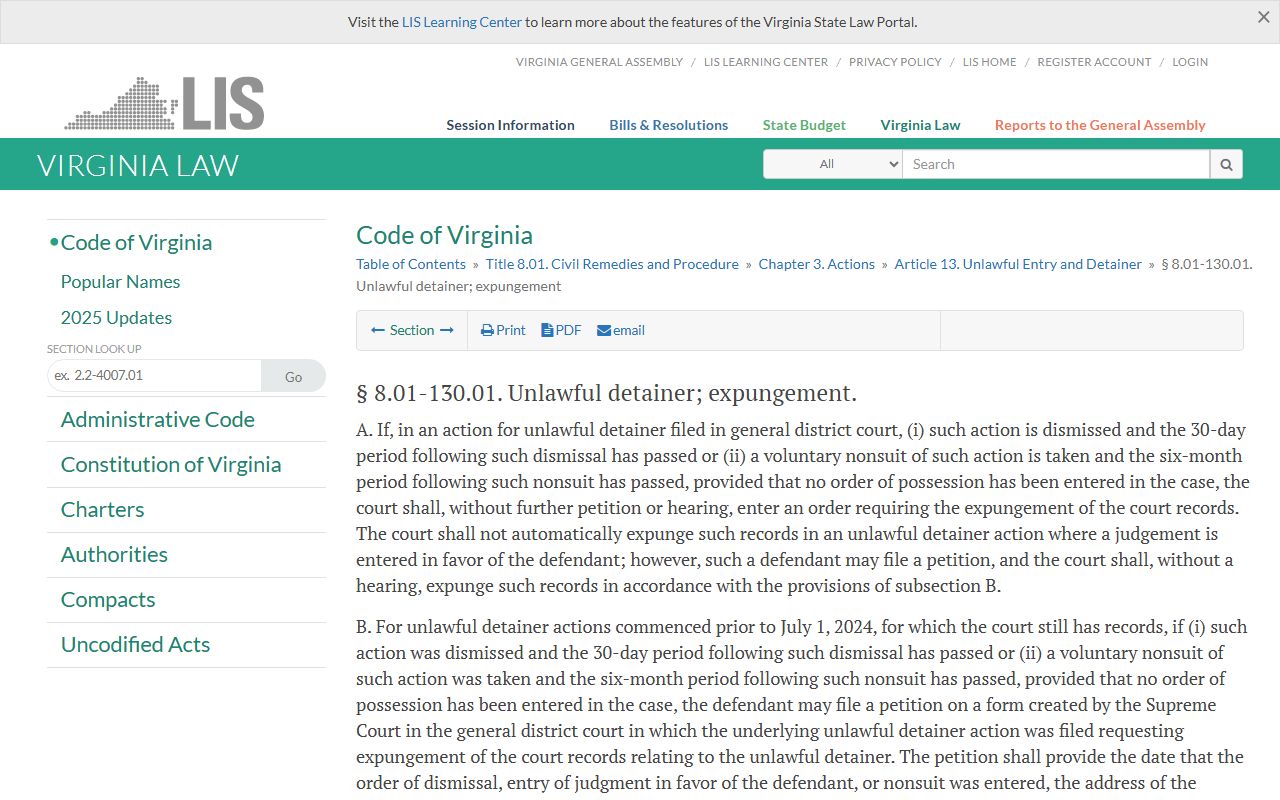
It is useful for tenants trying to clean up an old eviction filing.
When a Public Records Request Is Denied
A denial should not be the end of the road. Under FOIA, an office that withholds a record must cite the specific exemption it is using. That citation tells you whether the denial is sound or worth questioning.
If you think a record was wrongly withheld, ask the office to clarify the exemption, narrow your request, or request only the public parts of a mixed file. FOIA gives requesters avenues to challenge a denial, and clarifying the exact exemption is the first step.